We Don't Have Time for That!

rabbit.gif

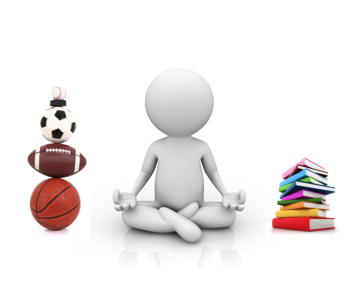
Recently, as I was driving my youngest daughter to her tennis lesson, I was alarmed to hear a deep, raspy cough come from her little body.   I told her that we needed go to the doctor to get her throat checked.   Much to my surprise, she responded, "Mom, we don't have time for that."    It was one of those parenting moments that stopped me in my tracks,  realizing that the message that I want to teach my children was not coming through loud and clear, but rather being muddled and muddied by my actions, and our busy schedules. The number one stressor of adults and teens today is time -- having too much to do and not enough time to do it all.  Children and teens, and not just the adults who care for them, are feeling the stress of overloaded schedules, and the pressure to do so much and to do it all well.   Many of my favorite childhood memories are of long, lazy weekends, or afternoons filled with what seemed like endless hours of unstructured, unscheduled playtime.   Yet,  I often wonder what memories my own children will have of their childhood?  Will they remember long, lazy days full of fun and imaginative play or will they remember rushing from one activity to the next?

We are blessed to have so many wonderful opportunities for ourselves and for our children, but the stress and anxiety from being over-scheduled may virtually eliminate the benefits gained from those activities.  As Henry David Thoreau put it, “It’s not enough to be busy, so are the ants. The question is, what are we busy about?”   Perhaps it is a return to the simple things that we enjoyed as children that would have a greater impact on our children's creativity, self esteem and happiness.    They grow up too quickly as it is.  Perhaps helping them to slow down is the best gift we can give them -- allowing them time to make a mess, time to clean up, time to make mistakes and time to learn from them, time to create and time to imagine.

As the beautiful flowers are blooming outside, I am reminded once again how important it is to literally stop and smell the roses, to enjoy the incredible opportunity of an unplanned afternoon, and to make sure that my children experience the great joys in slowing down, in not feeling rushed, and in taking the time to just be.

New Spring 2014 Mindfulness Classes!

Screen-Shot-2014-04-10-at-5.41.25-PM.png

Spring Cleaning?

Forget the closets  . . .

dive in to your mind!  

Join us this Spring for our new classes and workshops that will help you dive in to those mental habits of the mind that cause us stress and imbalance.  These classes are designed to help you lower your stress, and increase your sense of calm and balance.  You spoke, we listened.  We have added new classes with more guided meditation time so that you can sink in, relax and exercise that mental muscle weekly by gathering together to practice mindfulness with a group.  Men, women and teens (ages 14 and up) are all welcome to participate.  We hope you will join us!  Check out our new Spring classes by clicking on the class links to the right or checking out our new classes by clicking here.

What Do this Year's Olympic Athletes and Super Bowl Champions Have in Common?

I am truly enjoying watching the 2014 Winter Olympics, as I marvel at the athleticism, mental toughness and bravery of the Olympic athletes.  They seem to be able to do things with their bodies that would be impossible to most mere mortals, while facing both physical and mental challenges with such incredible courage and composure.  Their secret is out, however, and all evidence points not only to incredibly disciplined physical conditioning, but also to training their brains to conquer their fears and mental roadblocks which could  keep them from performing  at their highest level.  Using techniques such as guided visualizations to imagine themselves achieving their Olympic goals, daily meditation practices to stay calm and focused, and mindfulness exercises to learn to handle their negative thoughts that serve as roadblocks to optimal performance, Olympians are including their brains as a key part of their daily conditioning.  Brain-Training Secrets of Olympic Athletes And, how about those Seattle Seahawks?  I must admit that I did not have a favorite team going in to this year's Super Bowl, nor did I pick a team to root for once the game began. (I was more interested in selecting the best Superbowl commercial.)  I was, however, blown away by the sheer force, focus and seemingly unstoppable performance of the Seahawks, led by quarterback Russell Wilson, on Super Bowl Sunday.  It was no surprise that I later learned of the incredible Seahawk training regimen that includes daily yoga, meditation and mindfulness training.  (Lotus Pose on Two, ESPN Magazine, August 2013)

What was once the purview of Buddhist monks and yogis, yoga, meditation and mindfulness training is now becoming an important part of melding physical and mental conditioning to optimize an athlete's performance.   Trainers, coaches and athletes alike are seeing that one of the most important parts of the body to train is the brain.

Weekly Wisdom #31

One evening an old Cherokee told his grandson about a battle that goes on inside people. He said, “My son, the battle is between two wolves inside us all.  One is Evil – It is anger, fear, envy, jealousy, sorrow, regret, greed, arrogance, self-pity, guilt, resentment, inferiority, lies, false pride, superiority, and ego.

“The other is Good – It is joy, peace, love, hope, serenity, humility, kindness, benevolence, empathy, generosity, truth, compassion and faith.”

The grandson thought about it for a minute and then asked his grandfather: “Which wolf wins?”

The old Cherokee simply replied, “The one you feed.”

- Cherokee Legend

Which Wolf Do You Feed?

blog-Wolf-image.jpg

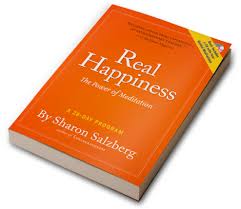
Thoughts from Week 2 of the Real Happiness - 28 Day Meditation Challenge . . .  

One evening an old Cherokee told his grandson about a battle that goes on inside people. 

He said, “My son, the battle is between two wolves inside us all.  One is Evil – It is anger, fear, envy, jealousy, sorrow, regret, greed, arrogance, self-pity, guilt, resentment, inferiority, lies, false pride, superiority, and ego.

“The other is Good – It is joy, peace, love, hope, serenity, humility, kindness, benevolence, empathy, generosity, truth, compassion and faith.”

The grandson thought about it for a minute and then asked his grandfather: “Which wolf wins?”

The old Cherokee simply replied, “The one you feed.”

This Native American Cherokee story was told to me three times in one week, by three different people, in completely unrelated situations.  A message from the Universe, heard loud and clear. I love this story because it  relates so beautifully to the practice of meditation and mindfulness.  We are motivated either  by love or by fear.  The amazing part of a meditation practice is that we can begin to observe our patterns of behavior, thoughts and emotions, to see them for what they really are -- fear based acts or acts of unconditional love.   Once we become more aware and see ourselves more clearly,  we can decide how we choose to act -- an amazingly powerful process.  The other incredible benefit from a meditation practice is that we can cultivate a different attitude or lens through which we see the world.   We can choose to act from love rather than from fear, and practice creating positive neural pathways (the scientifically researched approach) or practice lovingkindness (the 2500 year-old Buddhist meditation approach).   However one chooses to explain the process, we can choose to act from love rather than from fear.  In doing so, the world becomes a different place (kinder, gentler, more loving), and we begin to move in it with greater joy and greater ease.  So, this week, as I continue Week 2 of my Meditation Challenge, I look deeper at which wolf I feed, and continue to choose love.

Day 3 of the 28 Day Meditation Challenge - Happy Snow Day!

peace-on-snow-day-300x225.jpg

Day 3 – Snow Day!

For those of you in the New York area, today, Day 3 of the 28 Day Meditation Challenge is a day where 6 to 10 inches of beautiful, puffy white snow is falling.   Most schools and activities have been cancelled for my kids, and the day has transformed from a busy one full of things to do and places to be, to a day to stay home and relax, to read, play and enjoy being together.   Just yesterday, I wrote about how I was getting ready for a very busy week ahead.  I was strategizing how to use my meditation practice to remain calm and focused while working through my long “to do” list on Monday morning.  How I love the unpredictability of life  . . .   a snow day . . . . and I didn’t even know snow was in the forecast.

The upside of a snow day . . . . it allows me and my children the opportunity to hit the PAUSE button.  Snow days are the perfect time for them to stop, breathe and abandon their all-too-busy schedules for a day to play in the snow, to read a book, to cook with mom, to sleep in, and to just be.

The challenge of a snow day  . . . as all of you parents home with your kids know, snow days do not come without their own challenges (chaos in the kitchen, teenagers glued to their technology and kids begging to make plans with their friends).  We always want to clear our children’s schedules, and once we do, we often recognize that routine and schedules can be a very good thing.  The real goal, as always, is to be fully present – not planning for tomorrow or using this time to add to my list of things to do -- but to enjoy this wave of downtime, of togetherness and to take a moment or two throughout the day to watch the beautiful, white snow falling outside my window, which is always a powerful reminder of the beauty around us and the importance of being fully present to enjoy it while it lasts.

The snow day really helps me to recognize again exactly what mindfulness and meditation can help us with most.  It helps us to ride the waves, the ups and the downs, the highs and the lows, the unexpected change of plans, and the full range of emotions we experience along the way. We learn to enjoy what is right before us, not think about what was supposed to be, or could have been or what will never be, but accept what is.   We tap in to our inner “OK-ness,” the amazing ability to recognize that we are going to be OK, whatever the situation, connecting to our inner strength and inner peace to face whatever life brings our way each day.

Happy Snow Day!!

What is all this Mindfulness stuff anyway?

mindfulness-rx.png

Mindfulness is everywhere – in the news, on magazine covers, in our schools and all over the internet – which leaves many wondering, where did it come from and why is it attracting so much attention? Mindfulness has its roots in ancient India.  Over 2500 years ago, Vipassana meditation was taught by Buddha as a remedy for life’s ills.  Vipassana means insight into the true nature of things, to see things as they really are.  It is a non-religious meditation practice that aims to eliminate mental impurities so that one can reach a state of happiness and contentment, free from the burdens of the mind that are said to create human suffering.

Although mindfulness has been practiced for thousands of years, it has gained its recent popularity in the West in large part due to the work of Jon Kabat-Zinn, founder and former director of the Stress Reduction Clinic at the University of Massachusetts Medical Center, and his pioneering work in Mindfulness Based Stress Reduction.  As a medical doctor who studied Buddishm, Kabat-Zinn decided to use mindfulness and meditation practices to treat patients suffering with chronic pain.  His work and the research that followed have shown that these ancient practices can bring great improvements in both physical and psychological health, as well as changes in attitude and behavior.

Mindfulness is now commonly defined as the practice of purposely focusing your attention on the present moment—and accepting it without judgment.  In this busy, fast-paced modern world, the ability to hit the pause button and place your full attention on what you are actually experiencing in your body and in your mind, as you are experiencing it, has proven not only to improve chronic health problems, but has also been linked to human happiness.

The practice of mindfulness continues to evolve and new tools are emerging to incorporate mindfulness into our daily lives.  At 2bpresent, we have studied with Buddhist monks, psychologists, leaders in the fields of mindfulness meditation and positive psychology, as well as experimented with mindfulness apps and online meditation groups, to better understand how to integrate these ancient practices into our modern world.  Twenty-first century technology is being used to conduct research on the brain and the effects mindfulness practices have on our power to change our brain structure and improve its function.  There is also new and emerging research that shows the effects mindfulness practices have on children, improving emotional self-regulation, increasing focus and attention, decreasing stress and improving academic performance.  There is good reason that the mindfulness movement is gaining popularity, not just as a fad but as a promising new avenue to improved health and well-being.

In light of the soaring costs of medical care and the increasing use of prescription drugs to treat the symptoms rather than the causes of disease and disorders, mindfulness offers great potential to improved health and wellness.  It is also a key focus in our quest for happiness.  For all of these reasons, this ancient practice that dates back thousands of years is now experiencing a renaissance in our modern world as the mindfulness revolution.

Our Holiday Gift to You - Our Favorite Quotes for the New Year

gifts.jpg

Last year at this time, we offered our Top 10 Mindfulness Tips from 2012.  This year, we want to give you some food for thought (no calories in this holiday gift), our Favorite Quotes for the New Year.  We love great quotes and the wisdom that comes from these incredible people.  They are like nourishment for the soul. We offer these to you to taste, chew on a bit, take some time to digest, and, afterwards, see how they leave you feeling.  Enjoy! (10)  "If you want others to be happy, practice compassion. If you want to be happy, practice compassion."  - Dalai Lama.

(9)  "Between stimulus and response, there is a space.  In that space is our power to choose our response.  In our response lies our growth and our freedom."  - Viktor E. Frankl, Man's Search for Meaning

(8) “Resentment is like drinking poison and then hoping it will kill your enemies.”  - Nelson Mandela

(7) "Most folks are as happy as they make up their minds to be."  - Abraham Lincoln

(6) “[S]uffering is what happens when we struggle with whatever our life experience is rather than accepting and opening to our experiences with a wise and compassionate response.”   - Sylvia Boorstein, It’s Easier Than You Think 

(5) "Wherever you are, be there totally.  If you find your here and now intolerable and it makes you unhappy, you have three options:  remove yourself from the situation, change it, or accept it totally." - Eckhart Tolle

(4) “Life moves pretty fast. If you don’t stop and look around once in a while, you could miss it.” -Ferris Bueller

(3) What lies behind us and what lies before us are tiny matters compared to what lies within us.” – Ralph Waldo Emerson

(2) "There are only two ways to live your life.  One is as though nothing is a miracle.  The other is as though everything is a miracle."  - Albert Einstein

(1) “A man travels the world over in search of what he needs and returns home to find it.” – George Moore


Keep Calm and Carry On!  Mindfulness Workshop for Teens

Screen-Shot-2014-12-13-at-8.49.33-AM.png

"Everyone tells us not to stress out,  but no one tells us how." 

"We are told to focus and pay attention, but it so so hard to do, and no one teaches us that in class."

This course helps teens develop life skills using Mindfulness tools to Reduce Stress, Manage their Emotions and Increase their Focus and Attention, so they can Perform at their Full Potential.

Teenagers deal with many stresses and competing demands on their time and attention.    They have less and less time to simply be kids, to learn and to grow at their own pace and to enjoy the simple pleasures of life.  This can be overwhelming and stressful.  This course is designed to help your teen learn tools to cope with the demands of a very busy life.  We will learn and practice mindfulness exercises that help increase their ability to focus and pay attention, to calm down when feeling stressed or anxious, and to create more opportunities to enjoy simply being who they are so they can thrive.

What experts are saying about teaching Mindfulness to Adolescents:

"Research has proven that mindfulness training integrates the brain and strengthens the important executive functions that support emotional and social intelligence as well as academic success."      -  Daniel J. Siegel, M.D. & Clinical Professor, Author of Mindsight and Brainstorm: The Power and Purpose of the Tennage Brain

"The inner reserve of mindful awareness is available to everyone, and these faculties of mind, developed with practice, have direct relevance to burgeoning self-awareness, to self regulation, and to the emotional balance that supports fully engaged learning and well being."       - Patricia Broderick, PhD, Learning to BREATHE

"Through the systematic cultivation of attention, awareness, self compassion, and kindness toward others - all capacities that adolescents already have and that can be strengthened through training - a set of fundamental and highly beneficial life skills are developed.  These skills can help teenagers navigate more effectively through a time in life that can be confusing, filled with uncertainties, and exceedingly stressful.  These skills form the basis for building successful relationships, beginning with oneself.  They can also contribute to optimizing the classroom environment and learning."

                            - Jon and Myla Kabat-Zinn, forward Learning to BREATHE


Scientific American CoverA growing body of scientific evidence shows that mindfulness training can be instrumental in reducing stress and its negative effects on the body.  Stress negatively affects the developing brain in regions that are involved in executive function, working memory capacity and emotional regulation.  Learning these skills gives children the tools to improve emotional self-regulation, to reduce stress, and to sustain focus and attention through fun activities and practices.  We also explore compassion and empathy as a means to better relate to to other and to better understand ourselves.

This course will meet for 45 minutes per week for five weeks.

Private Sessions and Groups are now forming.  To set up your own private session or group for your teen, please contact cheryl@2bpresent.com.

What students of 2bpresent workshops are saying:

"The 2bpresent mindfulness workshop was very effective in helping my teenage son learn techniques he could use when feeling anxious. These tangible tools have enabled him to keep his mind and body calm in stressful situations, allowing him to get through them successfully where he would previously get stuck. My son was skeptical going into the class, but Cheryl relates well to teenagers - he enjoyed the class, and came back for more. "  Lisa, mother of 14 year old boy

"I took a Mindfulness course with 2b Present.  This class helped me to recognize my perfectionistic thoughts and let them go.  I enjoyed the relaxation techniques, and the teachers really knew how to connect to teens."  - S, age 12

"It made me realize that I wasn't the only one that was stressed and anxious. I felt safe and comfortable sharing and learning in a friendly environment. " - S, age 14

"The handouts were helpful so I could practice breathing exercises at home. I liked the Kid-friendly comics and diagrams that made it fun and understandable.” - J, age 12


About the Instructor . . .

Cheryl Brause  has a degree in Economics from the University of Michigan. Upon graduation from college, Cheryl worked as an investment banking analysts for Goldman Sachs. She then earned her law degree from New York University School of Law. Cheryl worked as an attorney for several years in Manhattan doing corporate litigation, white-collar crime and public interest law. She has had many roles in her life, but her most challenging and most rewarding job yet — mother of three children.  The culmination of her life experiences in the corporate world and as a busy parent led her to explore a personal yoga and meditation practice. The life-changing effect of these practices and her desire to share the amazing teachings of leaders in the field of meditation and mindfulness inspired her to co-create 2bpresent.  Cheryl has studied meditation and mindfulness under the guidance of many leaders in the field.  She is trained in Learning to BREATHE and Mindful Schools Curriculum Training.   She has completed her Level I and Level II Meditation Teacher Training from Om Yoga.   Cheryl has studied MBSR and Buddhist Psychology, as well as Neuroscience and Positive Psychology.  She has also participated in Search Inside Yourself, Google’s Mindfulness-Based Leadership training  for business leaders.   Cheryl is a motivational speaker, and teaches mindfulness and meditation privately to children, teens and adults, as well as for businesses and organizations.  She has also created and taught programs in and around New York to train executives, teachers and students in stress reduction techniques and mindfulness tools to help them thrive.


What people are saying about our classes and workshops . . .

"Every now and then you come across a class or a person who helps you to be a better person.  Cheryl offers just that.  I am a better person because of all the things that I have learned- I am a better spouse, a better mother, a better friend, a better co-worker, and actually even more compassionate with myself.  And what’s the best part?  That I got all this by simply learning how to slow down and calm down.  I will be forever grateful!

Taking the beginning meditation class is the single most important thing I have done for myself in the last decade.  I can honestly say that my family and I are all happier because of my taking this one step to learn how to be calmer and more mindful."   - Psychologist, mother and participant in Real Happiness and Mindful Living


"Cheryl's class taught me not only how to meditate, but how to incorporate mindfulness into everything that I do. Cheryl is extremely knowledgable about the practice of mindfulness and has a teaching style that is very easy to understand and accessible. It was a truly life changing experience. I can't wait for my next class!"  - MBA, mother, participant in Mindful Living


"I took Cheryl’s mindfulness class last spring and the effects have stayed with me.  The tools and techniques she showed the class were fun and easy to use and the discussion really brought everything down to a real level that can be applied.  Cheryl has a unique way of speaking about mindfulness that is very insightful and practical.  I thoroughly enjoyed the class and would highly recommend it!"   - Organizational Development Consultant, mother, participant in  Mindful Living


Create your own group:

We are also available for private group sessions.  You can organize your own group of kids for a five week session.  Minimum of six kids are needed for a private group.  Please contact us to set up your group.


Schools:

We are also available to schools for classroom, lunchtime or after school programming.  Please contact us for more information.

Mindful Living: An Introduction to Mindfulness and Meditation

joy-photo.jpeg

Mindful Living: An Introduction to Mindfulness and Meditation

In this course, we will explore meditation and mindfulness practices that can be used everyday to help reduce stress, increase a sense of calm, clarity, and connection, and create greater contentment in our lives.  Each class will consist of a discussion of mindfulness tools and the developing research on the neuroscience of mindfulness, as well as group mindfulness practices.

“Mindfulness practice means that we commit fully in each moment to be present; inviting ourselves to interface with this moment in full awareness, with the intention to embody as best we can an orientation of calmness, mindfulness, and equanimity right here and right now.”

― Jon Kabat-Zinn, Wherever You Go, There You Are: Mindfulness Meditation in Everyday Life

Benefits of Mindfulness and Meditation include:

  • Increased attention, focus and concentration
  • Decreased levels of stress
  • Increased sense of calm, balance and equanimity
  • Improved mood
  • Greater ability to regulate emotions
  • Improved sleep patterns and overall sense of  wellbeing

Class Dates & Times:  Four week session begins February 26th.  Classes will  meet from 8 pm to 9:30 pm on Wednesdays, February 26, March 5, 12 and 19. Snow date will be March 26th.

Location:  Groove, 108 Chatsworth Avenue, Larchmont, New York.

To Register click here.